Crypto Trading Fees
Coinbase operates as a centralized exchange (CEX) that uses a dual account system:
- Simple retail trades on your Basic Coinbase account that incur variable spreads and high transaction fees, or
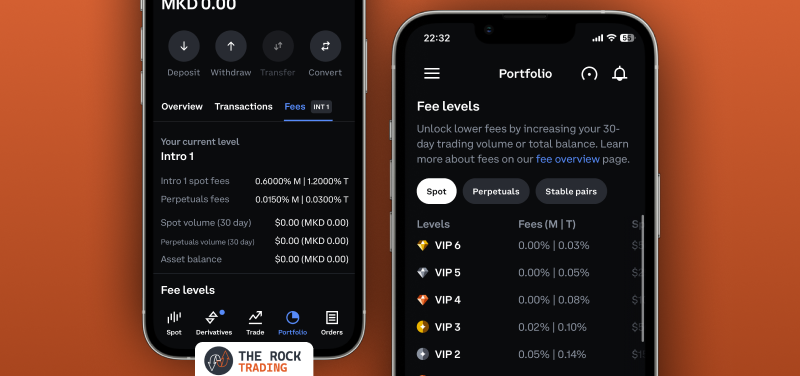
- Advanced trader accounts that offers a professional maker-taker model starting at 0.40% and 0.60%, respectively.
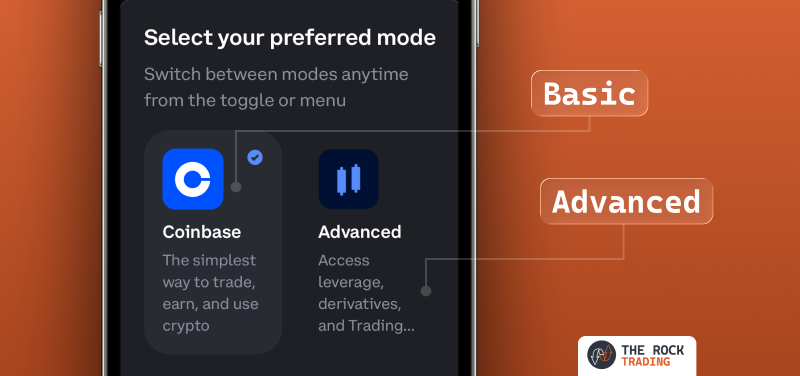
The model is both volume-based and account-based, and is designed to suit both casual crypto traders, and high-frequency traders who seek institutional-grade pricing.
During our testing, we used both Coinbase Advanced Trade and the basic account’s Simple Trade version. The total fees are displayed before you finalize the trade, and we saw that the advanced account had significantly lower fees.
Coinbase Trading Fees
This table explains the pricing differences between the standard and advanced fee structures, and for each trading platform. | Platform | Standard/Simple Fee | Advanced/Pro Fee |
|---|
| Coinbase | ~1.49%–3.99% + spread | 0.40% maker / 0.60% taker |
| Binance | 0.10% (fixed) | 0.02%–0.10% |
| Kraken | 1.50% (Instant Buy) | 0.25% maker / 0.40% taker |
Still, Coinbase has higher fees compared to other cryptocurrency exchanges like Binance’s 0.10% taker fee for example.
Coinbase also has a premium monthly Coinbase One membership account that costs from $5 up to $300 with various benefits.
- Zero trading fees
- Better account protection
- Staking rewards
- Customer support priority
- $25 rebate on spot fees
- Free wire transfers
Coinbase Trading Fees Explained
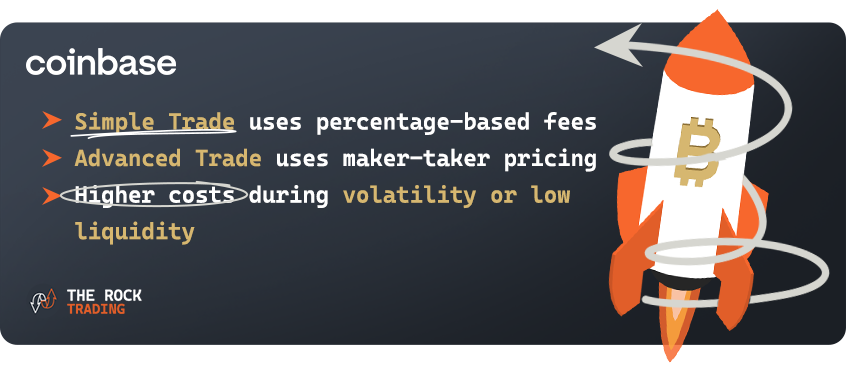
Coinbase’s Simple trades use a flat fee for small transactions or a percentage-based fee for larger orders which can be much higher than the Advanced trade. In contrast, the Advanced Trade’s maker-taker model lets you pay less for providing liquidity via limit orders (maker) than for taking it with market orders (taker).
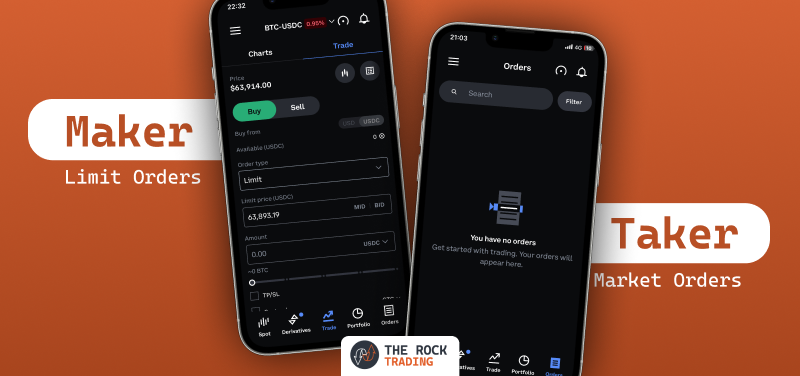
These fees are calculated at the time of execution and are visible in the trade preview screen on your app or web browser while you’re processing the order. These costs are wider for lower-liquidity assets, and during periods of extreme price fluctuations. Your total cost is determined by your 30-day trailing volume, and the higher your trading activity is, the lower your commission fees will be incurred.
The fees are lower for Coinbase users who trade at high volumes using the Advanced Trade platform.
Spread and Hidden Costs
The crypto exchange operates with a hybrid broker model that matches orders directly with other market participants on its central limit order book (CLOB) while actively fostering third-party liquidity providers. When you use simple buy and sell on your basic account, Coinbase includes a spread in the quoted price that typically averages around 0.5% to 2% depending on market volatility, liquidity, and trade size.
Typical Spreads for Major Crypto Pairs
This table shows the typical spread ranges for selected major cryptocurrency pairs under Basic and Advanced trading modes. | Crypto Pair | Typical Spread (Basic) | Typical Spread (Advanced) |
|---|
| BTC/USD | 0.50% – 1.00% | 0.01% – 0.05% |
| ETH/USD | 0.60% – 1.10% | 0.02% – 0.06% |
| SOL/USD | 0.80% – 1.25% | 0.05% – 0.10% |
| XRP/USD | 0.80% – 1.50% | 0.08% – 0.15% |
| ADA/USD | 0.90% – 1.60% | 0.10% – 0.20% |
With Advanced Trade, the spread is removed, and you’re interacting directly with the order book. The price you see is the actual price set by the global market. Coinbase doesn’t have any payment for order flow (PFOF) relationships with market makers, so basic account users’ additional costs directly impact their entry and exit prices.
Other Fees to Be Aware Of
Coinbase’s basic service fees can be high, with reports of users paying around $15 of service fees to purchase $1000 worth of Bitcoin.
There’s also a 35% commission fee if you earn rewards through their staking services for coins like ADA, AVAX, DOT, ETH, MATIC, and SOL, and there’s a lower 26.3% commission fee if you have a Coinbase One premium subscription.
Aside from standard trading commissions, Coinbase also has operational costs like network gas fees, conversion charges, ATM fees, and specific payment method surcharges. They don’t charge an account maintenance or inactivity fee, but moving assets off the platform to an external crypto wallet may incur network fees which depend on current network congestion.
Coinbase’s fee model is highly transparent, but the cost of convenience can cost you a lot. While the maker-taker tiers on their Advanced Trade are competitive with other major exchanges, the spreads and flat fees on the Basic retail can significantly affect you if you’re a small-scale investor. We’re giving the fee department a 6/10 because it reflects the platform’s volume-based incentives for active traders, but there’s a relatively high entry costs for casual users.
Crypto Markets
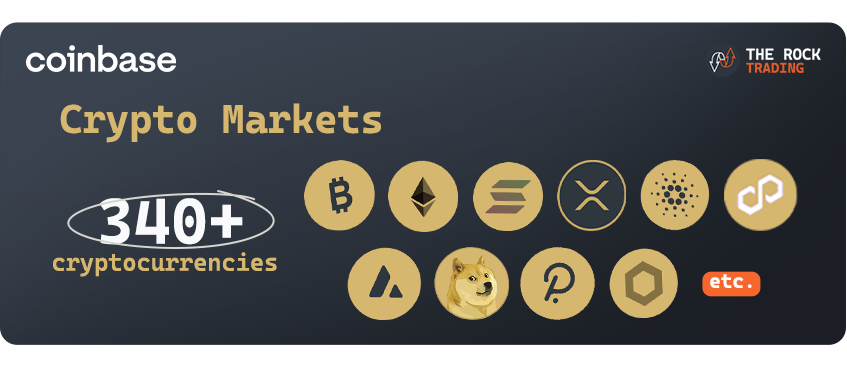
Currently, Coinbase has over 380 spot trading assets, +230 USDC trading pairs and 22 stablecoin pairs, while a Coinbase Pro account offers an even wider selection of pairs that’s over 550 assets.
Cryptocurrency Market Size by Exchange
This table compares the approximate number of cryptocurrencies available in each exchange’s market.| Market | Cryptocurrencies |
|---|
| Coinbase | +340 |
| Binance | +400 (EU), +200 (US) |
| eToro | +130 |
| Robinhood | +70 (EU), +50 (US) |
Though Coinbase has fewer crypto assets than Binance, what makes their market special is their own Asset Hub which is a centralized platform made for digital asset issuers that submit, manage, and list tokens. The crypto platform also serves as a vetting process for crypto tokens, and it prioritizes regulatory compliance and liquidity over sheer listing volume.
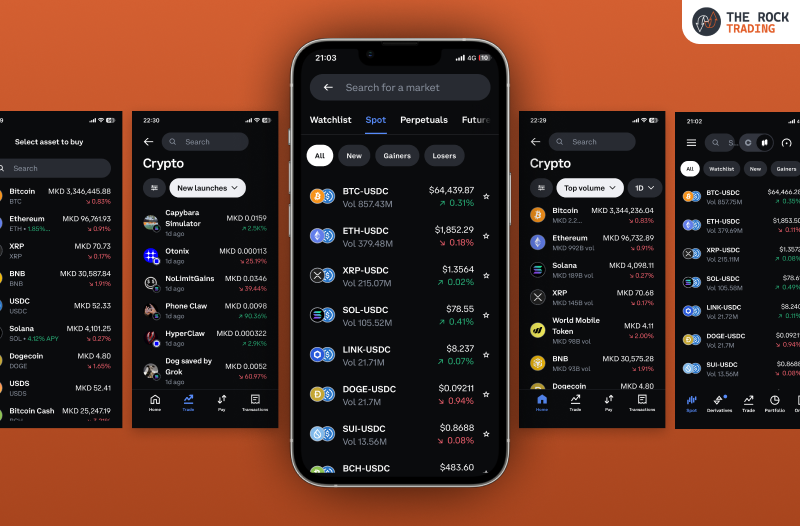
Coinbase evolved over the years by constantly adding and removing assets and rolling out upgrades consistently, and as of February 2026, they have a market cap of approximately $46.2 billion.
Available Cryptocurrencies
On Coinbase, you can spot trade with foundational major coins like Bitcoin (BTC), Ethereum (ETH), and Solana (SOL), as well as emerging decentralized finance tokens, but the main focus is on high-liquidity majors which is the bulk of the platform’s trading volume.
Typical Advanced Spreads for Major Crypto Assets
This table outlines the typical spread ranges under Advanced trading mode for widely traded cryptocurrency assets.| Asset Name | Ticker | Typical Spread (Advanced) |
|---|
| Bitcoin | BTC | 0.01% – 0.02% |
| Ethereum | ETH | 0.02% – 0.03% |
| Solana | SOL | 0.03% – 0.05% |
| XRP | XRP | 0.04% – 0.07% |
| Cardano | ADA | 0.05% – 0.10% |
| Avalanche | AVAX | 0.06% – 0.12% |
| Dogecoin | DOGE | 0.08% – 0.15% |
| Polkadot | DOT | 0.10% – 0.18% |
| Chainlink | LINK | 0.05% – 0.09% |
| Polygon | MATIC | 0.09% – 0.14% |
| Shiba Inu | SHIB | 0.15% – 0.25% |
| Litecoin | LTC | 0.04% – 0.08% |
| Bitcoin Cash | BCH | 0.10% – 0.20% |
| Uniswap | UNI | 0.12% – 0.22% |
| Stellar | XLM | 0.11% – 0.19% |
| Near Protocol | NEAR | 0.14% – 0.25% |
| Cosmos | ATOM | 0.15% – 0.28% |
| Optimism | OP | 0.16% – 0.30% |
| Arbitrum | ARB | 0.15% – 0.29% |
| Aptos | APT | 0.18% - 0.35% |
Unlike other exchanges that list thousands of unchecked tokens, Coinbase adds a new handful of assets per month, and only after they’ve been carefully vetted to meet the Asset Hub’s security standards. The number of coins is lower than some competitors, but they’re generally more secure.
The Asset Hub’s strict vetting reduces the risk of rug pulls or projects with zero developer activity, though it may mean high-risk traders missing out on early-stage token opportunities.
Fiat-to-Crypto Markets
Coinbase offers major currencies including USD, EUR, GBP, CAD, and AUD, and you can trade directly against these fiat currencies which bypasses the need for an intermediate stablecoin like USDT or USDC.
Fiat-to-crypto pairs aside, niche altcoins on Coinbase are often only tradable against BTC or USDC, whereas most of them are tradable against USDT on Binance, for example.
Upon our testing of multiple pairs for US citizens, the USD pairs have the deepest liquidity and the tightest spreads on the platform.
Trading Pairs and Liquidity
Liquidity on Coinbase is among the highest in the digital asset space, particularly for USD and USDC-denominated pairs. For major coins like Bitcoin, the order book is thick enough to support institution-sized trades with minimal price impact which professional traders can appreciate.
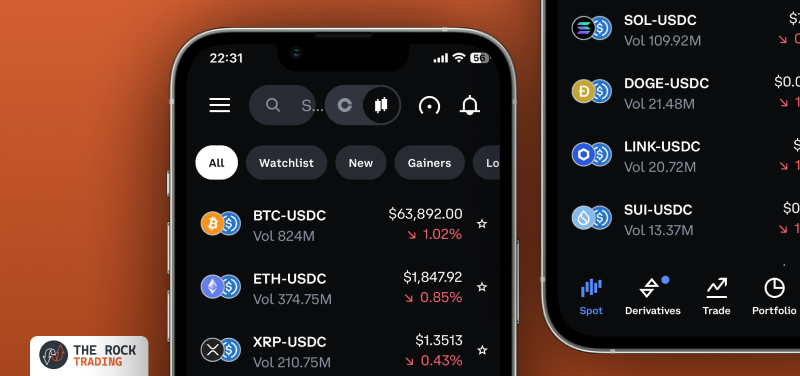
Slippage can still occur during periods of extreme volatility, market crashes, or when trading low-volume altcoin pairs. In these scenarios, using the Simple Trade on the basic Coinbase interface may give you a wider spread, while the Advanced interface allows you to use Limit Orders to control entry points and minimize slippage costs.
The markets segment scores a 8/10 because of decent fiat support and high-quality liquidity for major assets. Another positive aspect is the quality level vetting of new listings, as well as the access for ‘on-ramping’ process for global users.
Trading Platforms and Tools
Coinbase operates exclusively through its own proprietary web and mobile platforms and it functions as a basic version and an Advanced interface that can be switched in your options. The platform is available in over 100 countries in regions where Coinbase provides service, including the US, EU, UK, and Australia.
The ecosystem is split to suit different needs, as the standard interface suits beginner traders and long-term investors, while the Advanced Trade suite is engineered for high-volume technical traders and professional speculators.
There’s also a business account type designed for corporations called Coinbase Prime, and a premium subscription membership called Coinbase One, both of which offer different benefits and functionalities.
Coinbase Web Platform
The Coinbase web platform is minimally designed with a light learning curve, making it the primary choice for casual traders or those who are looking for straightforward execution. The interface focuses on portfolio management and asset discovery, and it helps you navigate and manage your holdings and tax reports.
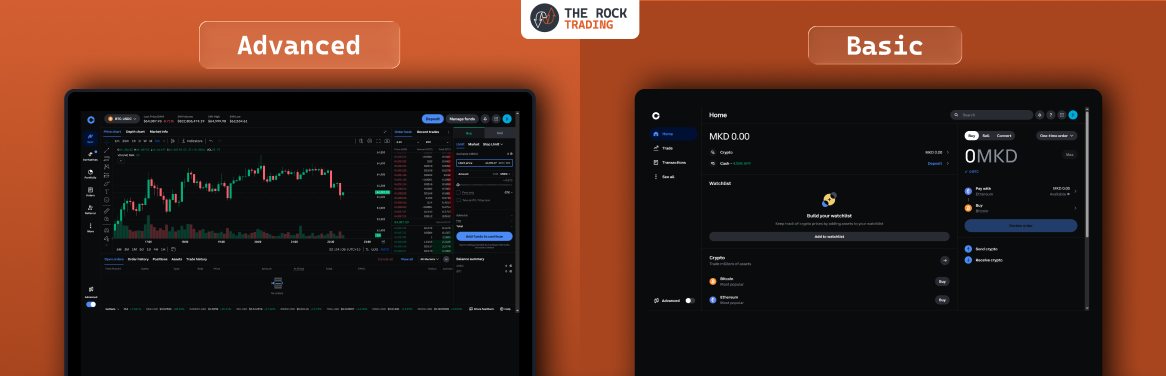
You can access essential order types such as simple market buys and sells, which execute instantly at the current quoted price. At first glance, it’s built for quick trades, and recurring purchases without the distractions of complex market data.
Charting depth on the standard web view is intentionally basic with a clean and uncluttered interface, so it’s not for those who like to see more indicators and asset management options. You have access to line and candlestick charts with selectable timeframes, but there aren’t any advanced drawing tools or a large library of technical indicators.
Coinbase Mobile App
Similarly to the web-based platform, the Coinbase mobile app is designed with minimalist functionality in mind just for managing your account on the go. Its main strength is its accessibility and simple monitoring for price alerts, as well as account security and biometric authentication.
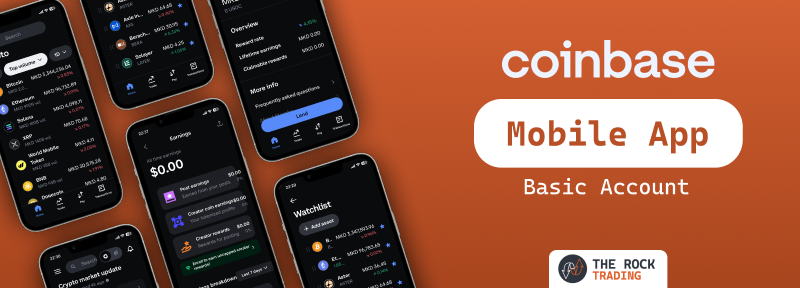
While it is suitable for basic transactions, I found it very tedious for active day trading because it has limited screen real estate, and you can’t view deep order books and multiple charts. It’s best used as a secondary tool if you need something to stay connected to the markets while away from your workstation.
The mobile app is available on both the Apple App Store and Google Play Store.
Coinbase Advanced Trade
Coinbase Advanced is a professional-grade trading interface built for control, better monitoring, and you have access to a more complex set of professional order types like limit orders, stop-limit orders, and bracket orders to manage risk.
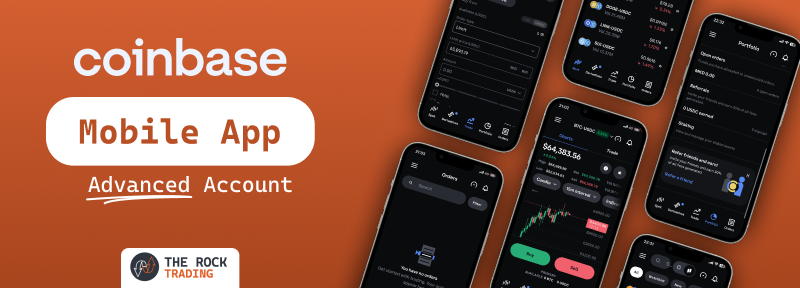
Unlike the simple version, the Advanced mode allows you to interact directly with the central limit order book, bypassing the baked-in spreads of the basic interface. It also supports execution instructions like Post-Only or Immediate-or-Cancel to help optimize your strategy exactly as you intend. This version is suitable for precision entries and exits, as well as for frequent day traders who like the maker-taker fee schedule that can minimize transaction costs.
Charting, Indicators, and Order Types
Coinbase doesn’t have native integration for third-party terminals like MT4, MT5, or cTrader. It does, however, integrate the same TradingView technology and buttons directly into the Advanced Trade interface, so the interface may feel like familiar territory for TradingView users.
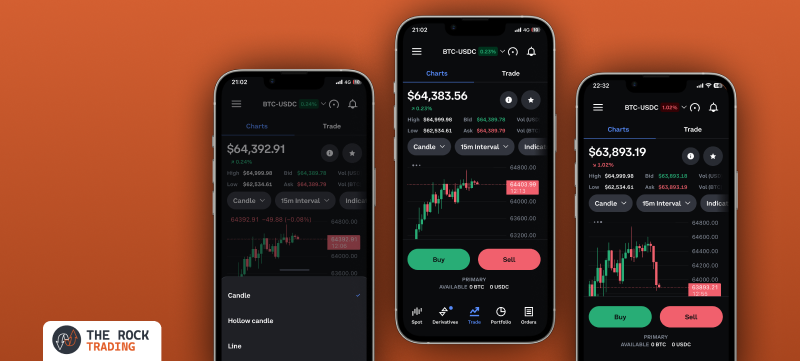
The integration gives you advanced drawing tools and over 100 technical indicators like the Relative Strength Index (RSI), Moving Averages (MA), and MACD so you can perform detailed technical analysis. You can also customize your workspace layout, and toggle between price charts and depth charts.
I personally found the built-in tools helpful and diverse, but they do have their limitations compared to a TradingView Premium subscription. For example, you cannot use custom Pine Script strategies or community-created indicators that aren’t a part of the regular Coinbase set.
Addons
While there are not many addons, the exchange has its own API that allows developers to create tools and program their own bots, automation, and portfolio management.
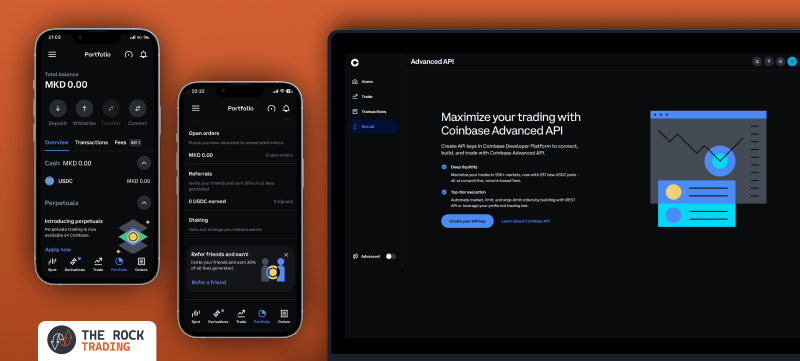
For example, the REST and WebSocket API protocols allow you to import account information, automate trading through external software, and there’s also third-party extensions that can help you integrate your Coinbase data directly into Google Sheets for custom portfolio tracking and tax preparation.
Keep in mind, some advanced addons like API tools for futures trading still remain restricted in regions like the US, UK, Canada, and other countries where the regulation applies.
Coinbase scores a 8/10 for its modular, easy-to-use platform that can be transformed into an Advanced version with full TradingView integration. It’s secure and reliable across both web and mobile interfaces. While it could definitely use support for standard third-party platforms like MT4 or MT5, it has just enough flexibility and automated script modding suitable for most types of traders.
Safety and Regulation
Coinbase is globally regarded as one of the most compliant cryptocurrency exchanges due to its Tier 1 regulatory status with its extensive licensing, strict coin vetting, and standardized security protocols.
Depending on your residency as a trader, you’re protected by different regulatory frameworks, ranging from state-level money transmitter licenses in the US, to FCA authorization in the UK.
Regulation and Licences
Coinbase is licensed across major jurisdictions throughout the world. As a publicly-traded US company (NASDAQ: COIN), the crypto exchange undergoes regular financial audits and maintains a high level of corporate transparency.
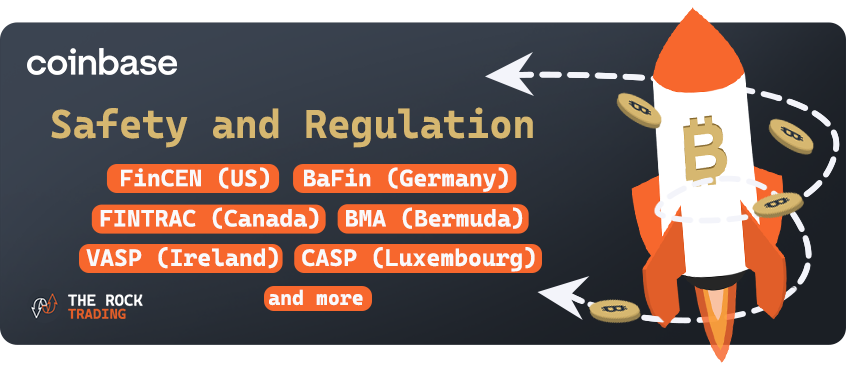
In the United States, Coinbase is registered as a Money Services Business with FinCEN, and holds 50 State Money Transmitter Licenses (MTL) that includes the New York BitLicense which is one of the hardest regulatory approvals to obtain.
- United States: Registered as a Money Services Business (MSB) with FinCEN and licensed as a money transmitter with Money Transmitter Licenses (MTL). FinCEN compels them to follow strict anti-money laundering rules, while the MTL require Coinbase to prove they have information security programs as a condition of keeping their license.
- United Kingdom: CB Payments, Ltd. is authorized by the Financial Conduct Authority (FCA) as an electronic money institution, and compels Coinbase to keep fiat currencies in safeguarding accounts separate from the firm’s funds.
- Canada: Registered with the Financial Transactions and Reports Analysis Centre of Canada (FINTRAC) which subjects the crypto exchange to strict oversight on transaction and identity transparency.
- European Union: Holds various licenses for consumer protection, risk transparency, and capital reserves, including a VASP registration in Ireland, a Crypto-Asset Service Provider (CASP) license from the CSSF in Luxembourg, and a MiCA (Markets in Crypto-Assets) license that was secured in 2025.
- Germany: Licensed by the Federal Financial Supervisory Authority (BaFin) for crypto custody, IT security, and storage standards.
- Bermuda (Offshore Derivatives Exchange): License from the Bermuda Monetary Authority to operate an offshore derivatives exchange for non-U.S. clients, protecting from counterparty risk, and separating the collateral from the firm’s onw speculative trading.
- Singapore: Holds a Major Payment Institution license from the Monetary Authority of Singapore (MAS) to safeguard your funds, and maintain a minimum base capital for covering expenses or potential losses.
Keep in mind, all of the regulations serve as a framework for financial transparency and integrity of the firm. The licenses only serve as a framework of operational integrity, and they don’t work like traditional bank insurance.
Custody and Asset Storage
To mitigate exchange custody risk, Coinbase maintains strict fund segregation where assets are never combined with the company’s operational capital. They employ two critical security measures to secure customer assets: cold storage and multiparty computation (MPC) for generating cryptographic signing keys.
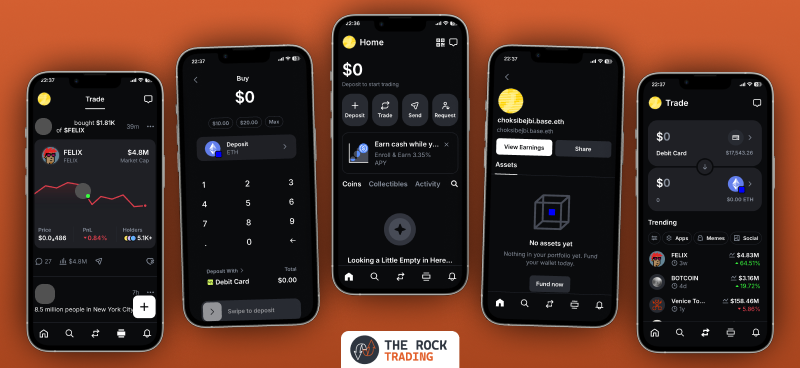
You do not control the private keys for the funds held on the exchange, instead, Coinbase acts as your institutional custodian. Coinbase stores 98% of customer crypto assets in secure, offline cold storage locations in geographically distributed vaults, while the other smaller fraction of funds remains online on Coinbase hot wallets.
Similarly to Binance, the SIPC or the FDIC do not protect your cryptocurrency assets because cryptocurrency holdings are not considered securities. The only thing that’s insured are the US dollar fiat balances held in the custodian Coinbase accounts at FDIC-insured banks like JPMorgan Chase, and Cross River Bank with an insurance up to $250,000 per depositor.
Account Security Features
Many users consider Coinbase to be one of the most trustworthy and secure cryptocurrency platforms not only because of its regulatory compliance, but because of the many layers of crime insurance protocols.
- Account security: Coinbase requires you to verify your identity by submitting personal details and a government-issued ID. Once you create your account, you can secure it using two-factor authentication (2FA), and Coinbase will remind you to also use hardware security keys like YubiKey or authenticator apps over less-secure SMS codes.
- Coinbase Vault and withdrawal whitelisting: The Coinbase Vault feature allows you to set up user approvals and time-delayed withdrawals in which crypto can only be sent to your verified addresses. Any new address added to your list will have to wait 48 hours before activation, meaning that even if an attacker gains unauthorized access, they won’t be able to drain your funds.
- KYC: Coinbase is audited by FinCEN to maintain strict standards for handling sensitive customer identification documents (KYC).
- Negative balance protection: For EU and for International Derivatives, the firm offers negative balance protection to ensure you cannot lose more than your initial deposit during high-volatility events.
- Crypto recovery system: In case you send an unsupported cryptocurrency from an external wallet to your Coinbase wallet, the firm will charge you a network fee of 5% for values over $100 for the recovery attempt. If you make that mistake on other exchanges those assets will be lost forever.
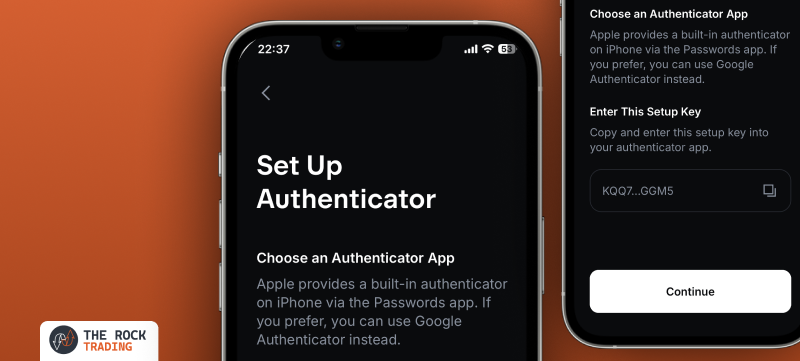
Coinbase scores 9/10 in Safety and Regulation, setting a gold standard for the industry for its massive library of global licenses that provide a level of transparency and accountability many competitors do not have. The many security layers may be overkill, but they also positively affect the score.
Funding and Withdrawals
Coinbase has an integrated gateway for transferring traditional currency and digital assets in and out of your account. You can fund your account using various regional ways like ACH in the US, SEPA in Europe, and Faster Payments in the UK.
The platform supports a wide range of fiat currencies such as USD, EUR, and GBP, but while the exchange is global, the currency exchange fees may vary based on your local bank and the service you use.
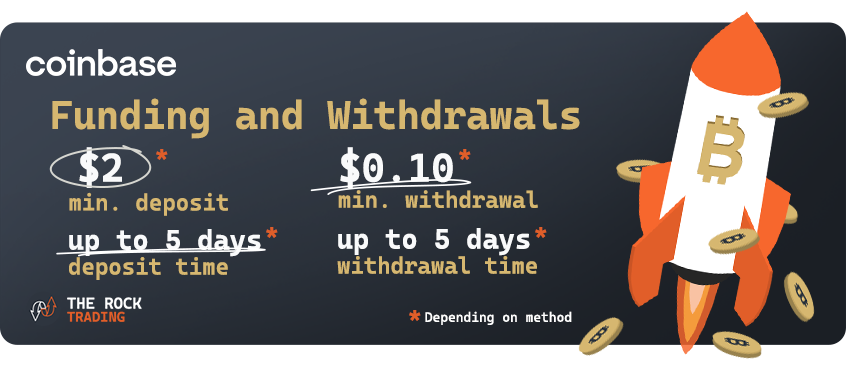
Deposit Methods, Fees, Waiting Times, and Network Costs
You can deposit funds into Coinbase using bank transfers, debit cards, PayPal, and wire transfers, with most regions requiring a minimum deposit of approximately $2 or the local currency equivalent.
Debit card PayPal deposits are faster if you require immediate access to the market, but they have higher processing fees, often ranging from 2.5% to 3.99% per transaction. Bank transfers are the most cost-effective, non-urgent ways to transfer, but they’re slower.
Deposit Methods Overview
This table shows the fees and processing times for each available funding method.| Methods | Bank Transfers (ACH/SEPA) | Debit Cards | PayPal | Wire Transfer |
|---|
| Fees | No Coinbase fees | 3.99% | 2.5% | $10 |
| Speed | 3–5 business days | Near-instant | Near-instant | 1–3 business days |
While you can trade with these funds immediately, the exchange may place a temporary withdrawal hold (usually 3–7 days) until the payment is settled.
Withdrawal Methods, Fees, Waiting Times, and Network Costs
You can withdraw funds through standard bank transfers, instant card cashouts, wire transfers, PayPal, or by sending cryptocurrency to an external wallet.
Fiat-related costs also vary, with US ACH transfers being free, while USD wire withdrawal transfers cost $25. Standard fiat withdrawals to your bank account via ACH or SEPA are often free of charge, but still adhere to the 1-to-5 business day processing window of your banking system.
Withdrawal Methods Overview
This table shows the available withdrawal methods, supported currencies, fees, processing times, and minimum withdrawal amounts.| Method | Currency | Withdrawal Fee | Speed | Min. Withdrawal |
|---|
| ACH Transfer | USD | Free | 3–5 Business Days | $0.10 |
| Fedwire | USD | $25 Flat Fee | Same Day / 1 Day | $1 |
| SEPA | EUR | Free / €0.15 | 1–3 Business Days | €0.10 |
| SWIFT | GBP | £1 | 1–3 Business Days | £1 |
| Faster Payments | GBP | £1 | Under 1 Hour | £1 |
| Instant Cashout | Multiple | 1.75% (Min $0.25) | Under 30 Minutes | $0.55 |
| PayPal | Multiple | Free | Instant | $1 |
| Crypto Assets | Digital | Network Fee | Variable (Chain) | Variable |
If you need instant cash, you can withdraw recently purchased cryptocurrency with the Instant Cashouts feature via a verified debit card for a fee, and it typically completes in under 30 minutes.
As for crypto withdrawals, they’re subject to dynamic blockchain and network fees. Coinbase estimates these fees based on current network congestion and tells you the amount on the confirmation screen before you finalize the transaction.
Processing times for crypto withdrawals can also vary, for example, a Bitcoin withdrawal may take longer than a Solana transfer due to the technology of the networks. Fees and waiting times often increase during high market volatility.
While Coinbase offers you a versatile range of funding options, the 6/10 score reflects the friction between patience and cost. You benefit from immediate trading access via debit cards, but the transaction fees are just too high, and the mandatory settlement holds for external withdrawals are not convenient.
Trading Rules and Limitations
Coinbase offers a strictly regulated trading rule environment that prioritizes customer fund security, and market integrity instead of going for high-frequency flexibility like on Robinhood. But, if you want sharper trades, execution quality is generally superior on Coinbase Advanced because of the depth of its institutional order books.
Cryptocurrency trading on Coinbase is accessible 24/7 for all markets, allowing users buying and selling crypto at any time, though there are some system maintenance windows that occasionally occur during periods of extreme network upgrades.
Restricted and Allowed Trading Styles
The platform’s rules are made to prevent market manipulation and give fair execution and order book stability for all traders.
The following trading styles and rules apply:
- Scalping: You are permitted to execute high-frequency trades, but you must adhere to rate limits on API requests to avoid system throttling.
- Hedging: You can open opposing positions on different trading pairs, though the platform does not offer a one-click hedging mode within a single sub-account.
- Automation: You have access to robust REST and WebSocket APIs for deploying trading bots, but only if they follow self-trade prevention rules.
- Copy Trading: Coinbase does not offer a native social copy-trading feature, but there are third-party integrations if you want to mirror other traders.
- Stop-Out Rules: Positions are automatically liquidated via a liquidation waterfall if your margin ratio hits 100%, as the exchange does not issue traditional margin calls.
Minimum Trade Sizes
You can start trading on Coinbase with as little as $5 for most retail orders, making the platform highly accessible for casual users. On Coinbase Advanced, the minimum order amounts are based on the specific asset’s decimal precision, such as 0.0001 for Bitcoin or 0.001 for Ethereum, and these low entry barriers only benefit retail traders who engage in dollar-cost averaging.
As for other trading restrictions, you may encounter a Post-Only mode during periods of extreme volatility, which restricts your orders only to add liquidity to the book rather than taking it.
Geographic Restrictions
Coinbase has specific restrictions regarding fiat-to-crypto, crypto-to-fiat, and crypto-to-crypto trading. While the Coinbase wallet is currently available in over 100 countries, crypto trading on the platform is prohibited in some countries outside of the EU, as well as sanctioned jurisdictions such as China, Iran, North Korea, Syria, and Cuba.
Regional Trading Availability
This table shows the availability of fiat-to-crypto, crypto-to-fiat, and crypto-to-crypto trading by country or region.| Country/Region | Fiat-to-Crypto | Crypto-to-Fiat | Crypto-to-Crypto |
|---|
| Africa | | | |
| Angola, Benin, Botswana, Burkina Faso, Madagascar, Mali, Mauritius, Namibia, Rwanda, South Africa, Togo, Tunisia, Uganda, Zambia | No | No | Yes |
| Cameroon, Ghana, Kenya | Yes | Yes | Yes |
| Nigeria | Yes | No | Yes |
| Asia | | | |
| Armenia, Azerbaijan, Bahrain, Georgia, India, Kuwait | No | No | Yes |
| Hong Kong, Taiwan, Turkey | Yes | No | Yes |
| Indonesia, Philippines, Singapore, Kazakhstan, Kuwait, UAE | Yes | Yes | Yes |
| Europe | | | |
| Andorra, Austria, Belgium, Bulgaria, Croatia, Cyprus, Czech Republic, Denmark, Estonia, Finland, France, Germany, Greece, Hungary, Iceland, Ireland, Italy, Latvia, Liechtenstein, Lithuania, Luxembourg, Malta, Monaco, Montenegro, Netherlands, Norway, Poland, Portugal, Romania, San Marino, Serbia, Slovakia, Slovenia, Spain, Sweden, Switzerland, United Kingdom | Yes | Yes | Yes |
| North America | | | |
| Aruba, Bahamas, Barbados | No | No | Yes |
| Bermuda, Cayman Islands | No | No | Yes |
| Curacao, El Salvador, Haiti | No | No | Yes |
| Honduras, Nicaragua, Panama | No | No | Yes |
| Trinidad and Tobago, Virgin Islands (UK) | No | No | Yes |
| Canada, Costa Rica, Guatemala | Yes | Yes | Yes |
| Dominican Republic | Yes | No | Yes |
| Jamaica, Mexico, United States | Yes | Yes | Yes |
| South America | | | |
| Argentina | No | No | Yes |
| Brazil, Chile, Peru | Yes | Yes | Yes |
| Colombia, Ecuador, Uruguay | Yes | No | Yes |
For example, Argentina and India cannot buy fiat directly and trade fiat-to-crypto, but they can access crypto-to-crypto trading, which means Coinbase users have to transfer their crypto from another wallet to the Coinbase account in order to trade.
Compared to other regions, US customers are limited to spot trading and highly regulated futures contracts through Coinbase Financial Markets, and they cannot access the International Exchange which offers a bigger range of perpetual futures and higher leverage tiers.
Leverage and Margin Availability
Leverage is not available on the standard Simple Trade interface, and it’s only accessible to eligible users via the Coinbase International Exchange for Perpetuals Futures, or if you’re a US trader, through Coinbase Financial Markets.
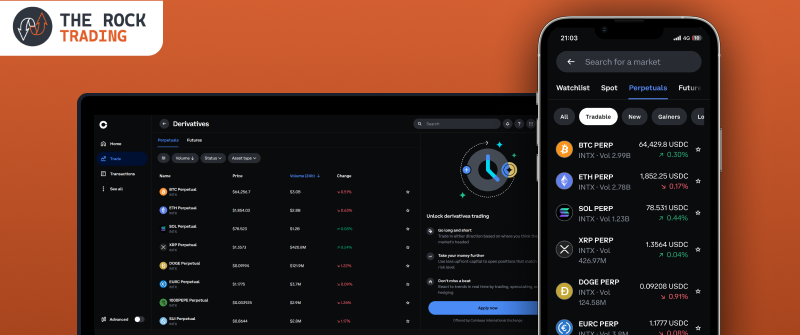
To be eligible for 10x leverage on perpetual futures trading, US investors have to complete an application questionnaire, provide financial details, and other KYC requirements.
Regional Leverage & Derivatives Access
This table shows the available account types, product offerings, leverage limits, and eligibility requirements by region.| Region | Account Type | Product Type | Max. Leverage | Eligibility Highlights |
|---|
| United States | Coinbase Advanced | US Perpetual-Style & Traditional Futures | 10x | Must pass suitability & financial checks |
| European Union (EEA) | Coinbase Advanced | Perpetual Futures (via CySEC) | 50x | Non-UK residents |
| Bermuda | Coinbase Advanced and Retail | Perpetual Futures | 50x | Requires Bermuda BMA onboarding/API access |
Leverage availability is strictly segmented by geographic location and your specific account designation, as UK retail users are strictly prohibited from crypto-derivatives.
Margin trading is allowed through derivatives and international arms, and is conservative compared to other offshore competitors. For newcomers trying margin trading, Coinbase uses an automated liquidation mechanism to protect the exchange’s solvency, and your positions can be closed at market prices without any prior warning.
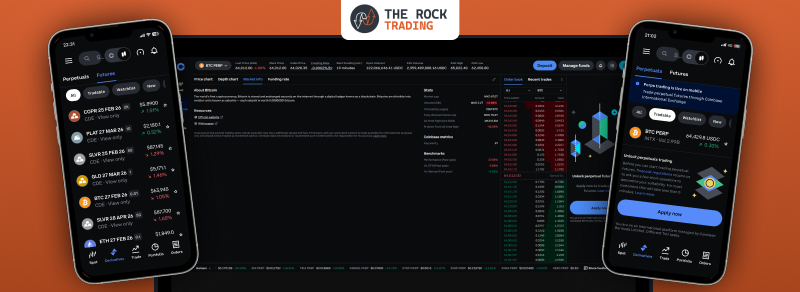
Coinbase earns an 8/10 due to its acceptable trading rules and prioritized market integrity. It’s suitable for a professional-grade environment for automation and scalping. Though there’s a lack of native social copy trading, and limited leverage, the execution quality and transparent order book are reliable and up to standards.
Coinbase’s Overall Score
We scored Coinbase 75/100 Coinbase because it balances security and regulatory compliance with acceptable fees and trading rules. As an entry-level exchange, it’s suitable for both US-based beginners looking for peace of mind, as well as long-term professional holders who are looking for a strong crypto trading security system.
However, it feels that the Simple Trade interface can erode your capital, especially if you’re a newcomer. It may not be suitable for cryptocurrency traders who want high leverage trading, and there are significantly higher fees for low-volume traders. The platform has tight KYC and conservative margins, so if you’re a high-leverage retail speculator, you should look elsewhere.
Compared to other brokers who are intermediaries, this crypto exchange uses an agency-based broker model on its institutional platform, and the liquidity is transparent because it provides direct market access that operates without an internal proprietary trading desk.