How Bitcoin Works
To understand how the bitcoin network works, you need to understand the technical protocol that powers the decentralized system. The network operates through a specific combination of three technologies – a distributed database (Blockchain), cryptographic security (Private Keys), and a consensus mechanism (Mining).
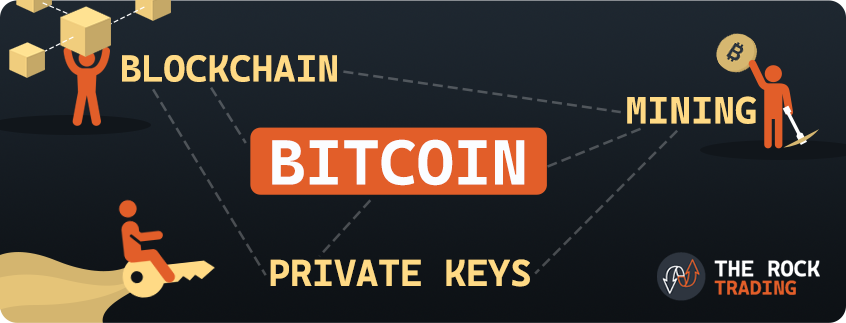
These components allow the peer to peer network to maintain a secure, shared history of financial data without requiring a central administrator to verify the records.
What is Blockchain Technology?
 The bitcoin blockchain is a digital ledger that permanently records every transaction executed on the network. Unlike a traditional bank database that lives on a private server, the blockchain technology distributes identical copies of this ledger across the entire network of computers.
The system organizes data linearly:
- Record Transactions: New financial data is grouped together into a block of transactions.
- Chaining: Once the network validates the block, it is cryptographically linked to the previous one.
- Immutability: This linking creates a permanent chain. To alter a past record, an attacker would need to rewrite that block and every one of the subsequent blocks, which is computationally impossible.
Crypto Transactions and Private Keys
A bitcoin transaction is not the transfer of a digital file between devices. It is a message broadcast to the network that updates the ledger, reassigning value from one bitcoin address to another.
To execute secure transactions, the system relies on pairs of cryptographic keys:
- Public Key: This generates your bitcoin address. It functions like a bank account number that you share to receive funds.
- Private Key: This is the private key secret that functions as your digital signature. It allows you to authorize the movement of funds.
When you use a bitcoin wallet or digital wallet, the software is not storing the coins themselves. It stores your private keys. If you lose access to these keys, you lose access to your digital assets. This architecture gives users full control over their crypto transactions but removes the safety net of a bank to reset a password.
What is Bitcoin Mining?
 Bitcoin mining is the process used to verify transactions and introduce new bitcoins into the supply. It ensures that the network remains secure and that no user can spend the same coins twice.
The bitcoin mining process involves specialized hardware competing to solve complex mathematical problems.
- Computational Power: Miners expend vast amounts of computing power to prove they have performed the necessary work to secure the network.
- Confirming Transactions: The miner who solves the problem first gets to add the next block to the blockchain.
- Rewards: In exchange for their energy and hardware costs, the successful miner receives a block reward in bitcoin plus any associated transaction fees.
What is Bitcoin Halving?
 The issuance of new bitcoins is strictly controlled by the protocol code written by Satoshi Nakamoto. To ensure the currency remains deflationary, the rate of inflation decreases over time through an event known as the Halving.
Every 210,000 blocks, or approximately every four years, the reward miners receive is cut in half.
- When bitcoin mining began in 2009, the reward was 50 BTC per block.
- This dropped to 25 BTC in 2012, then 12.5 BTC in 2016, and continues to halve.
This mechanism ensures bitcoin’s price dynamics are driven by absolute scarcity. As the supply of new coins entering the market restricts, the asset becomes harder to acquire. If demand for bitcoin payments or investment increases while supply tightens, the market naturally pushes the price upward.
Ways to Buy and Trade Bitcoin
There are three primary ways to buy and trade Bitcoin, you can purchase the underlying asset through a crypto exchange, speculate on price movements via CFD brokers, or trade with funded capital through prop firms. The right choice depends entirely on whether you want to manage the security of owning digital coins or simply profit from market volatility.
Cryptocurrency Exchanges (Buying Real Bitcoin)
 If your goal is cryptocurrency investing and long-term ownership, you must use a crypto exchange. This process involves swapping your local currency (fiat) for actual digital coins.
The main advantage here is ownership; you hold the title to the asset and can withdraw it to a private bitcoin wallet for safekeeping. However, this comes with the responsibility of security. If you lose your private keys or the exchange is hacked, your funds can be lost forever. This method is best for those who want to “buy low and sell high” over a period of months or years.
For beginners, regulated platforms like Coinbase and Robinhood offer the safest entry point with simple interfaces, while active investors often prefer Binance, ByBit, or KuCoin because they offer lower transaction fees and a wider range of altcoins.
Crypto CFD Brokers (Speculating on Price)
 For active traders who want to capture short-term profits without the technical hassle of storage, Crypto CFD Brokers are the standard choice. A Contract for Difference (CFD) allows you to trade Bitcoin’s price without ever owning the coin itself.
The primary benefit is the ability to use “leverage,” which lets you control a large position with a small amount of capital to amplify returns. The downside is that leverage also amplifies losses, making it risky for the inexperienced. You do not need a wallet, and you can easily bet on the price going down (shorting) as well as up.
If you are looking for fast execution and regulated security, look for brokers like Pepperstone and BlackBull Markets, while those needing a wider variety of crypto-specific pairs Eightcap is known for having an extensive asset list.
Crypto CFD Broker Reviews
Trading with Funded Accounts – Prop Firms
 The third option is for skilled traders who lack the necessary capital to generate meaningful returns. Proprietary trading firms (aka prop firms), allow you to trade using the company’s capital rather than your own money.
The model is simple, you pay a small one-time fee to take a prop challenge, and if you prove you can make a profit while adhering to strict risk management rules, the firm gives you a funded account and pays you a split of the profits (usually 80%). The massive pro here is risk reduction; you can never lose more than your initial sign-up fee.
Reliable firms in this space include Blueberry Funded, which is backed by a traditional brokerage, and FundedNext or BrightFunded, which are popular for their aggressive account scaling plans and crypto-optimized trading conditions.
Crypto Investing vs. CFD Trading
It’s vital to understand the difference between cryptocurrency investing and CFD trading before you start, as they serve completely different financial goals. While both approaches allow you to interact with cryptocurrency markets and financial assets, the methods, time horizons, and risk profiles are distinct.

If you are focused on investing, you typically align with the “buy and hold” strategy. You use exchanges to acquire bitcoin with the intention of holding it for months or years. You view the digital coin as a long-term addition to a diversified investment portfolio, similar to holding gold or real estate.
The primary advantage here is ownership. You hold the title to the asset and can transfer it to cold storage for maximum safety. However, this method requires patience and places the burden of security entirely on you; if you lose your keys, the funds are unrecoverable.
In contrast, CFD (Contract for Difference) trading is purely speculative. You do not seek to own the coin but instead aim to profit from daily volatility. This method allows you to buy and sell bitcoin price movements without ever handling the digital asset itself. The main benefit is the ability to use leverage, which allows you to control larger positions with less capital.
However, you must understand that both crypto trading and investing involves risk. While leverage can amplify gains, it also accelerates losses, and short-term price action is notoriously difficult to predict compared to long-term trends.
Other Digital Currencies
While Bitcoin was the first and remains the most popular cryptocurrency, the market has evolved into a diverse ecosystem of virtual currency. It is no longer just about one coin; it is about a wide range of alternate investments that serve different purposes.
Other decentralized digital currencies include:
- Ethereum (ETH): If Bitcoin is gold, Ethereum is “digital oil.” It is not just money, it is a utility platform that powers decentralized apps and smart contracts.
- Bitcoin Cash (BCH): This asset was created as a “fork” of Bitcoin. It was designed specifically to handle more transactions per second, aiming to function more like digital cash than a store of value.
- Stablecoins: These are pegged 1:1 to a fiat currency like the USD (e.g., USDT or USDC). They allow you to stay in the crypto market without exposure to volatility.
- Altcoins: This is a catch-all term for “Alternative Coins.” It includes thousands of projects ranging from legitimate technological innovations to highly speculative tokens.
Bitcoin is widely regarded as digital gold rather than a daily medium of exchange. Its primary value comes from its scarcity and security, making it a hedge against inflation in traditional currency. While you can use it for cryptocurrency transactions, it is often slower or more expensive than using a credit card.
However, the infrastructure is growing; you can now find Bitcoin ATMs in many major cities to swap cash for coins, and an increasing number of merchants now accept bitcoin directly
Crypto Risk and Regulation
Before you enter crypto markets, you must understand that the legal status and safety of Bitcoin depend heavily on where you live and how you choose to trade. While Bitcoin is a borderless currency designed to move freely across the globe, the companies that facilitate your trades are subject to strict local laws that vary significantly between regions.
Global Legal Status
In most developed economies, Bitcoin is fully legal to own but is rarely classified as digital cash. Instead, governments view it as property or a financial asset for tax purposes. This means that every time you trade, you likely trigger a taxable event, unlike when you use national currencies. Currently, El Salvador is the only major exception where Bitcoin is recognized as legal tender, placing it on equal footing with the US Dollar. Conversely, some nations have banned the use of the bitcoin network entirely, so you must always check your local laws.
Regulating Bitcoin
While the Bitcoin network itself cannot be regulated by any single government, the companies that connect you to it are strictly controlled. Authorities focus on the gateways, the exchanges and brokers where you convert fiat money into crypto.
The rules you face depend entirely on your trading method. Buying and holding the actual asset on an exchange is generally legal in most developed nations, provided you complete identity verification checks. However, active trading via derivatives (like CFDs) faces much tighter restrictions.
Because these products involve high risk and debt, regulators in regions like the USA and UK have banned crypto CFD trading for retail traders entirely. In other financial hubs, they are permitted but come with strict leverage limits to prevent users from losing their capital too quickly.
Crypto Trading and Investing Risks
Operating in a decentralized economy means you do not have the safety net of a central authority like a bank to reverse errors or recover lost funds. This independence places the entire burden of security on you. First, the market is notoriously volatile; prices can crash violently in a “crypto winter,” potentially causing a personal financial crisis if you have overextended your positions.
Second, you must consider counterparty risk depending on how you store cryptocurrency. If you leave your assets on a centralized exchange, you are trusting that company’s solvency – if they fail, your money is likely gone.
Finally, the irreversible nature of the blockchain means that once you send bitcoin, the transaction is final. Unlike a credit card charge, there is no way to force a refund if you are dissatisfied or make a mistake.
Scams and Operational Risks
Beyond government rules, the bitcoin network itself operates without a safety net or a customer support line. You face unique operational risks that do not exist in traditional banking. Crypto scams are common, such as phishing attacks that try to trick you into revealing your private keys.
Furthermore, user error is fatal, if you accidentally send funds to a crypto scam wallet or the wrong bitcoin address, the transaction is irreversible. Unlike a bank transfer, no entity can step in to refund your money.


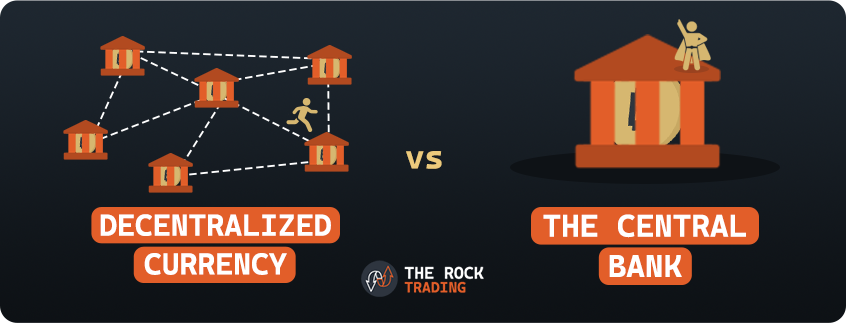
 At its most basic level, Bitcoin is a digital asset that allows you to send value to anyone, anywhere, without asking for permission. Unlike the dollars in your bank account, which are just entries on a private server owned by a corporation, Bitcoin lives on a public ledger that no single entity controls.